India supports a very large share of the world’s population, but its share of land and usable water resources is disproportionately lower. India carries about 17 % of the world’s population, yet occupies only around 2.4-2.5% of the global land area. Population density is very high, about 479 people per km².
India has only about 4 % of the world’s freshwater resources. Recent reports show a declining trend in India's per capita water availability, with the Central Water Commission estimating annual availability declining from 1486 cubic meters in 2021 and 1367 cubic meters in 2031, dropping further to 1228 cubic meters by 2050.
As per Falkenmark Water Stress Index, India is already in ‘Water-Stress’ category; and by 2050 it would be perilously close to ‘Water-Scarce’ level (under 1000 m³ per capita per year). Hence, resource management (especially water and land) is a critical issue for sustainable development of urban areas and food/water security.
NCHSE, which is actively supporting marginalized communities through introduction of appropriate technologies to attain sustainable development of the areas for about four decades has decided to launch a newsletter to disseminate local to global actions on natural resources management and sustainable development.
In this first edition, we bring stories of resilience and care - for water, for air, for people, for wild life, and initiative to adapt to climate change.
Key Message: "India must focus on low carbon and water centric development"
Shri P. K. Dash, IAS (Retd.) joined as the Chairman of National Centre of Human Settlements & Environment, Bhopal in September 2025. During his career in civil service, he held senior management positions with the Government of Madhya Pradesh and the Government of India. He has experience in diverse sectors such as Rural Development, Panchayat Raj, poverty alleviation, SHG mobilization, Micro enterprises, Watershed Development, Finance, Labour and Industrial Relations and Commerce & Industries.
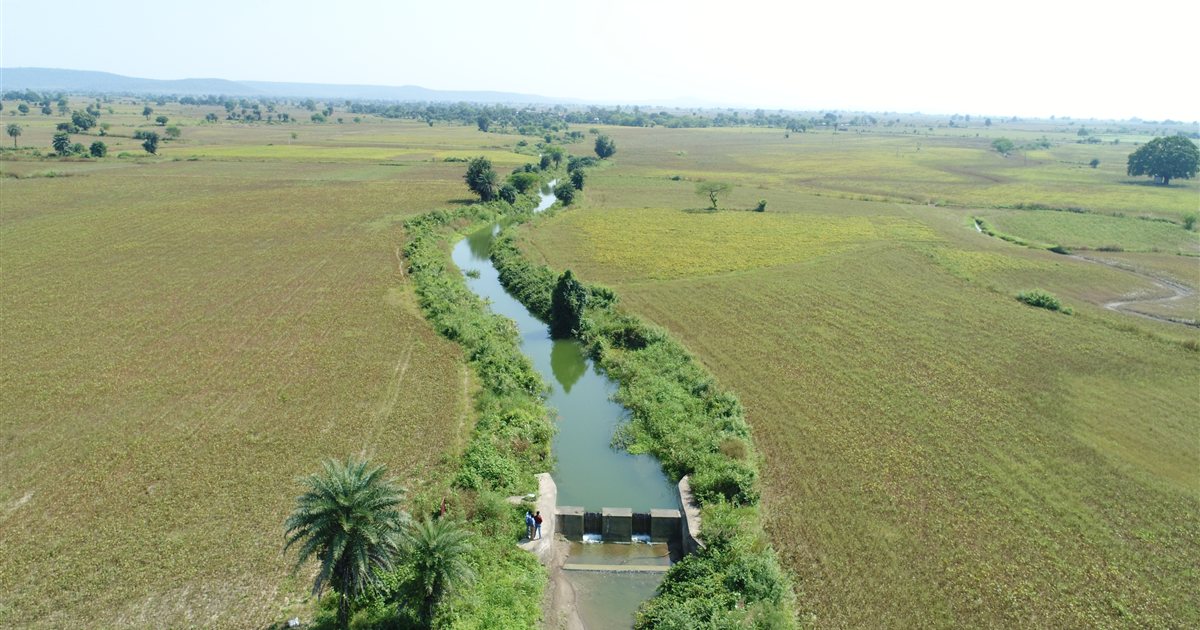
A continued and easy access to water is prerequisite for farmers particularly in the semi-arid agro climatic zone, like Vidisha district of Madhya Pradesh. The area receives sufficient rainfall (average 1135.50 mm), but suffer from high run off and low percolation of rainwater to ground. Due to local hydrogeology, the water availability in dug wells and bore wells of villages like Dighora and Pathrai in Gyaraspur Block of Vidisha District is insufficient and start drying form the month of November, which does not allow farmers to take high yielding wheat as a Rabi crop. Instead, the farmers relied on low water requiring, like Sarvati Wheat (C-306), gram, lentil and grass pea (Lathyrus sativus), a hardy and low-grade legume, which causes Lathyrism, a neurodegenerative disease on prolonged ingestion. The situation required conservation of rain water for growing suitable crops higher economic value.
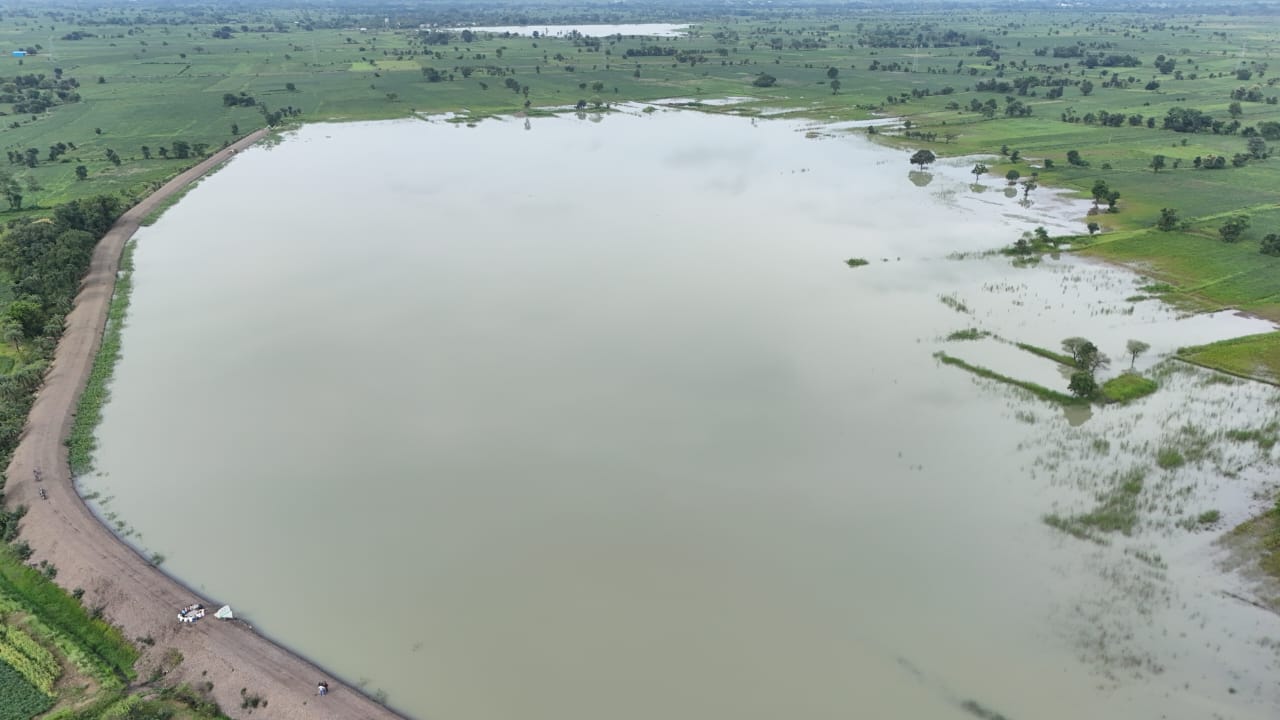
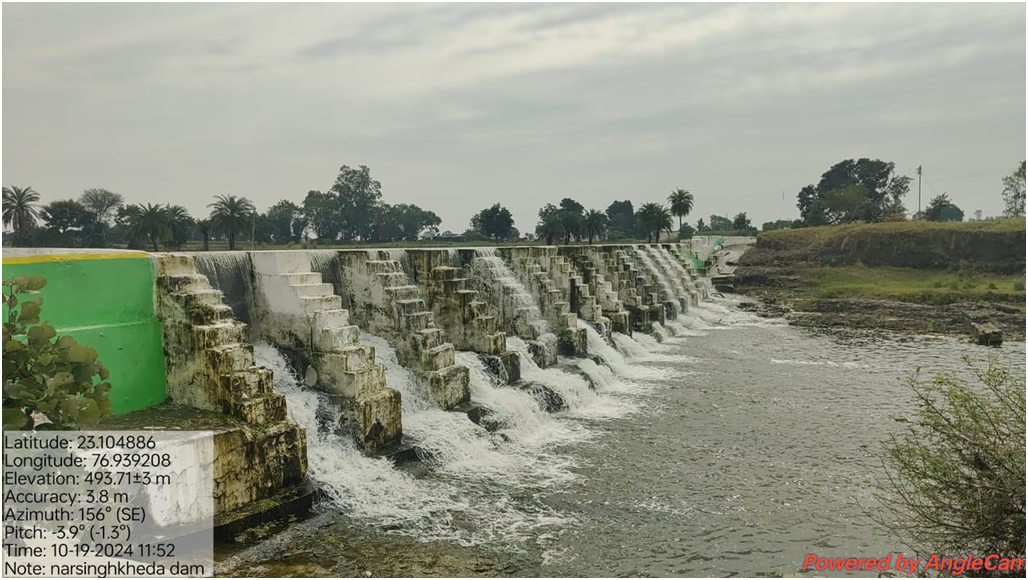
The intervention to revive the Kirkatia stream (Nallah), a tributary of Kaivatan River, which originates in the forest near Gundai and flows for 30 kms before meeting Chirvanta River, was initiated by NCHSE in partnership with the farmers in November 2015 with financial support from ITC Ltd under their Social investment programme. After a detailed situation analysis, NCHSE team decided to construct a series of micro irrigation dams across the entire length of Kirkatia stream and finalized their location through a series of consultations with the farmers having their crop fields along the stream. The first Stop dam was constructed in Pathrai village during the summer of 2016, for which each beneficiary farmer contributed 20% of the total cost in cash or kind. This allowed the farmers to take high yielding wheat crop (HI 1544) during the rabi season. The construction of another 17 Stop /check dams were completed by the summer of 2017. Thus, total water storage of 10,8000 cum was created, which helped 180 farmers to irrigate about 216 ha area in rabi season.
Farmers having assured of water supply gave up growing grass pea and shifted from less rewarding wheat (C-306) to High yielding (HI 1544) wheat. Their income also grew manifold from a minimum of Rs 21000-22500 per ha to Rs 134000-147400 per ha. Outcome was thus not only higher income but elimination of health risk of Lathyrism.
Dr Kapil Gupta, Professor of Water Resource Engineering, Civil Engineering Department, IIT Mumbai delivered the Lecture at EPCO Auditorium in Bhopal on 05th October 2025.
Dr Gupta flagged the major reasons of increasing incidence of flooding in Urban Areas in India as: (1) un planned development leading to increase in imperviousness of the soil, drainage slop and thus runoff. (2) Change of pattern and intensity of rain fall- more rains in a short period due to climate change. (3) Reclamation of wetlands for infrastructure development.
Presenting the examples of high intensity rainfall in a short time equivalent to rain fall in a month in various cities in India during 2025, Dr. Gupta cautioned that heavy precipitation is likely to be more frequent and more intense than that is being experienced now.
Dr Gupta recommended following mitigative measures to minimize impact of urban floods:
Shri S. N Mishra, Chairman, Madhya Pradesh Administrative Unit Reorganization Commission chaired the session. He advocated for revision of design parameters to handle excess rainfall, removal of all encroachment of drainage system and plastic waste that clogs the drainage system
Shri P.K. Dash, Chairman, NCHSE delivered the welcome address and highlighted NCHSE’s mission and core objectives and recalled the legacy of the Founder-Chairman Shri M. N. Buch.
Worldwide millions of people loose their lives due to road accidents. Accordingly, worldwide various events are organized on the third Sunday in November every year to mark the WDoR as well as to appropriately acknowledge the suffering of victims of road traffic crashes and their families.
The Ministry of Road Transport and Highways (MoRTH) has reported 4.73 lakh road accidents and 1.70 lakh deaths across 35 states and Union Territories in India in 2024. In the same year, Madhya Pradesh recorded 56,327 road crashes causing 14,791 deaths. Madhya Pradesh occupies 2nd position among the Indian States with respect to highest number of road accidents and 4th position in regard to number of deaths due to road accidents. Over speeding remained the leading causes of crashes and deaths in Madhya Pradesh, underlining the urgent need for safer speed limits, scientific traffic management, and stronger road safety action plans.
NCHSE organized a Cyclothon event to mark the WDoR and to honor the lives lost on the roads was organized on 15th November by NCHSE in partnership with the Road Safety Network (RSN) and Consumer VOICE, New Delhi in Bhopal. The event highlighted the urgent need for strong speed management measures and adoption of a comprehensive State Road Safety Action Plan in Madhya Pradesh, like that developed by IIT Kharagpur to save lives on roads.
Mr. Arun Gurtoo, Former DGP of Madhya Pradesh addressed the participants and highlighted the importance of road safety. He flagged off the event at NCHSE premises in Arera Colony. Thereafter, about seventy Cyclists rode through key city routes carrying messages such as "Slower Speeds, Safer Roads" and "Protect Lives: Reduce Speed." Citizens, students, and representatives from several civic and fitness groups, including BBRG, Arsh Women and Environment Welfare Association, Helpbox Foundation, and others, participated enthusiastically—underscoring that road safety is a collective responsibility.
NCHSE organised the CAP on 13 November 2025 at Samridhi Samudayik Prashikshan Kendra, Ghoradongri Block, Betul District with the support of TRAI, New Delhi. The programme aimed to make rural participants aware of the Consumer Grievance Redressal System in telecom and broadcasting services and to educate them about Cyber Hygiene and Cyber Crime. Around 100 participants, mainly from Self Help Groups (SHGs) attended the event.
This year Diwali, the festival of lights was celebrated on 20th October 2025. Post Diwali, the air quality index (AQI) of Delhi reached ‘severe’ category. As per Central Pollution Control Board (CPCB), the average AQI of cities across the country were found to be ‘very poor’ (AQI: 301-400). High level of PM2.5 was primarily responsible for such a situation, which could cause respiratory illness and may be more pronounced in people with lung and heart diseases.
Post-Diwali air pollution surged in MP cities as well. Indore recorded the worst pollution levels, with AQI reaching 361 in Chhoti Gwaltoli. In Bhopal’s Kohefiza area, AQI touched 336, while it reached 333 in Gwalior’s Maharaj Bada, 341 in Sagar, and 306 in Singrauli. Following the Diwali night celebrations, the air quality deteriorated so significantly that residents complained of eye irritation, breathlessness, and discomfort in several parts of the state.
he Western Ghats in India is one of the biological hot spots of the world. Recently a new plant species Tetrataenium manilalianum belonging to the carrot family (Umbelliferae/ Apiaceae) has been discovered in the Eravikulam National Park in Kerala’s Idukki district. The details of the new species have been published in the internationally acclaimed Nordic Journal of Botany from Sweden.
This plant, which grows only in grasslands bordering shola forests in high-altitude regions, has white flowers and underground rhizomes. It sprouts and flowers only during the monsoon season.
The species has been named in honour of renowned botanical researcher, founder president of the Indian Association for Angiosperm Taxonomy, and former Head of the Department of Botany at University of Calicut, Prof. K.S. Manilal. This is the 48th species identified within the carrot family, which includes well-known plants such as carrot, coriander, cumin, fennel, and ajwain.
In the past 50 years, the planet has experienced rapid growth of human population, development, and urbanisation, deforesting hundreds of million acres of forests across the globe along the way. As a result, wildlife is losing more habitats and food by the day. According to a 2020 analysis, the sixth mass extinction of wildlife on Earth is accelerating with more than 500 species of land animals on the brink of extinction that will likely be lost within the next two decades.
About NCHSE
National Centre for Human Settlements and Environment (NCHSE), a non-government organization, is registered as society in 1984 under M. P. Societies Registration Act, 1973 having its registered office at Bhopal. NCHSE facilitates participatory sustainable development of community with special focus on the weaker sections of society in order to promote rapid social mobilization and significant economic development.
NCHSE has experience of more than four decades in implementation of community based participatory Ecosystem Services Improvement Projects providing support mainly to poor community that includes forest dwellers, small and marginal farmers among others. NCHSE worked extensively for ecosystem improvement and integrated Watershed Development programme in various districts of Madhya Pradesh and in Rajasthan over an area of more than 3.0 Lakh ha, where bio-physical techniques for the conservation of water, soil and biodiversity were applied with community participation. In a number of locations, it has worked on eco-restoration of degraded ecosystems. During the last one decade, it is promoting climate-smart agricultural practices to help farmers reduce climate risk. It is also implementing financial literacy and skilling programme for the empowerment of women. It applies GIS technology extensively in demarcation of watershed areas, geo-tagging of water and soil conservation works, mapping and monitoring plantation areas, etc. It received several awards, which include the UNEP International Award in 1995 for its outstanding contribution towards Natural Resources Management, MP State Environment Award - NGO category for the year 2023-24 and State level Consumer Protection Award for the year 2012-13, 2014-15 and 2020-21.
| Editor: | Dr. Pradip Nandi |
| Published by: | National Centre for Human Settlements and Environment (NCHSE), E-5/A, Girish Kunj, Arera Colony, Bhopal – 462016 (M.P.) Email: nchsebpl@gmail.com, Website: www.nchse.org |
Copyright© 2025 NCHSE. All rights reserved.
Disclaimer: The information provided on this Newsletter is for general informational purposes only. NCHSE assumes no responsibility for errors or omissions in the content or for any actions taken based on the information provided.